
E-learning and Vibecoding: The Future of Education
The most popular e-learning platforms and how vibecoding is changing the future of education
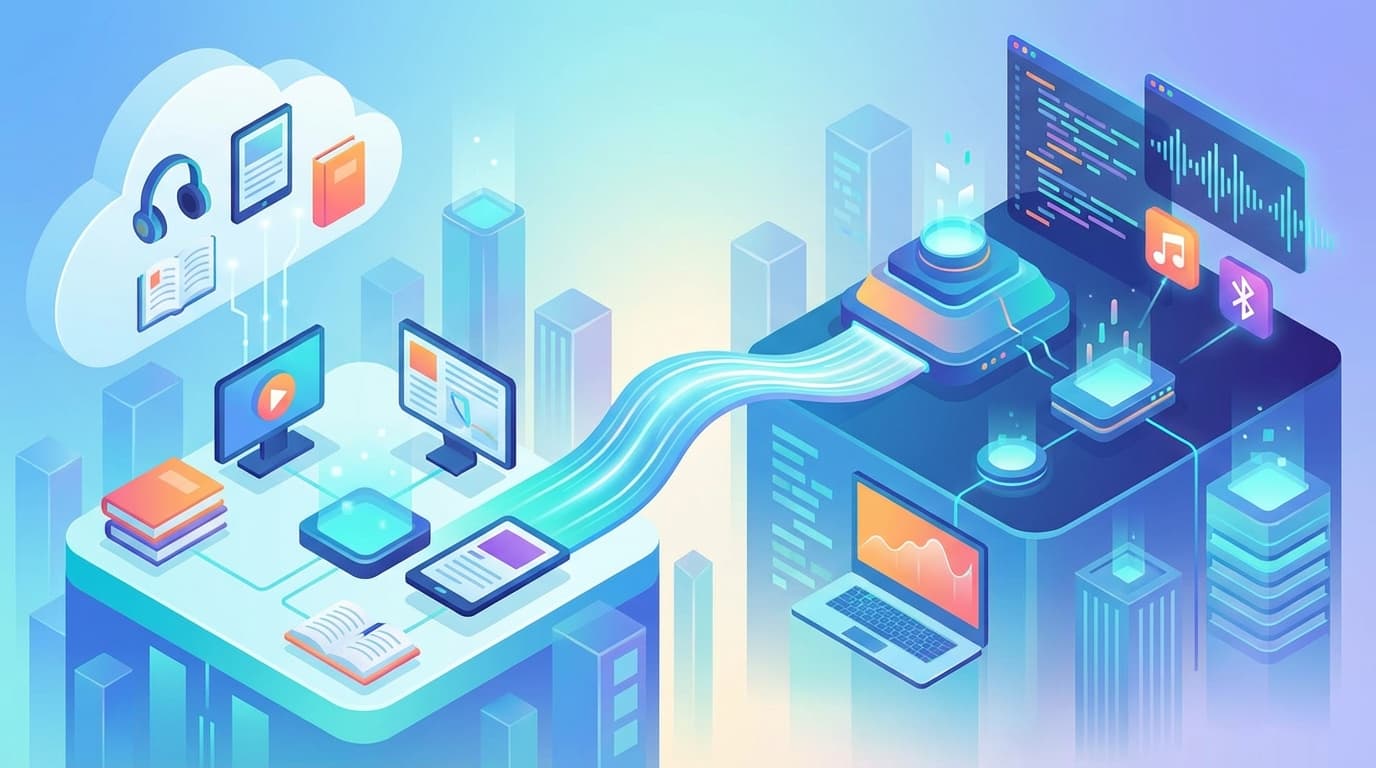
Imagine you want to create an application. You don't write a single line of code. Instead, you describe what the application should do, and artificial intelligence programs it for you. That's exactly how vibecoding works, and that's precisely why e-learning platforms in 2026 must rethink everything they've taught so far. On one side stand established platforms with millions of users; on the other, a phenomenon that's changing the very essence of what it means to "know how to program." These two currents are inevitably colliding, and the result of this collision is defining the future of technology education.
In this article, we'll look at the current state of the most popular e-learning platforms, explain what vibecoding actually is, and analyze the prerequisites for this phenomenon to fundamentally influence educational opportunities in the coming years.
What Is Vibecoding and Why Is the Entire Tech World Talking About It?
Vibecoding is a programming method where users describe desired functionality in natural language and artificial intelligence generates the corresponding code. The term was popularized in February 2025 by Andrej Karpathy, former Director of AI at Tesla and co-founder of OpenAI, according to Wikipedia. No writing lines of code, no knowledge of syntax required. Users simply "vibe" – they guide the direction, test the result, and adjust the input if the application output deviates from the original intent.
Karpathy himself claims that "the hottest new programming language is English" and that the programmer's role is shifting to that of a manager overseeing AI. What started as a joke has become recognized practice by 2026, with Merriam-Webster adding the term to its "slang & trending" words.
This working style is enabled by advanced AI editors and platforms like Cursor, Windsurf, GitHub Copilot, Replit, and Lovable. According to data published on Medium (Second Talent), 41% of all new code in 2026 is already generated by artificial intelligence. For many beginners, vibecoding is the only way they "program." And this is changing the rules of the game for the entire education sector.
Overview of the Most Popular E-learning Platforms in 2026
The online education market in 2026 continues to grow, with predictions of global revenue exceeding $200 billion USD. It's dominated by established players, but new types of platforms are emerging alongside them, responding to students' changing needs.
Coursera: Leader in Academic Education
Coursera maintains its position as a leader in academic and certified education in 2026. According to Business of Apps data, the platform has over 191 million registered users. Its strength lies in strong partnerships with universities and tech companies like Google and IBM. Coursera focuses on long-term courses, university degrees, and so-called "Professional Certificates" – credentials recognized by employers worldwide.
Udemy: The Largest Course Marketplace
Udemy functions as the largest marketplace for online courses and, according to Business of Apps, generates the highest revenue among online course applications. It offers over 200,000 courses, and its strength lies in rapid acquisition of specific skills – from courses like "Python for Beginners" to "How to Use ChatGPT for Coding." This very flexibility and ability to respond quickly to trends makes Udemy a key player in the vibecoding era.
edX: Prestigious Academic Platform
The edX platform, associated with institutions like MIT and Harvard, serves more than 40 million students. It focuses on prestigious academic education and emphasizes deep understanding of principles – which, as we'll see, is paradoxically becoming even more valuable in the vibecoding era.
Specialized Platforms for Developers
Alongside traditional giants, platforms integrated directly into development tools are growing in importance. According to Business of Apps, this trend is one of the defining features of 2026:
- Replit: Originally a development environment (IDE), it now functions as an educational ecosystem where users can "vibecode" applications and share them instantly. It's becoming a de facto school for a new generation of creators.
- Codecademy and Mimo: Still popular for interactive learning, but they must adapt to a reality where AI writes the syntax.
- Cursor: An AI editor that itself becomes an educational tool – users learn to program by communicating with AI directly in the environment where code is created.
How Vibecoding Is Changing What People Need to Learn
Vibecoding is rewriting e-learning platform curricula from the ground up. Traditional courses focused on the syntax of specific programming languages are losing relevance. New types of skills, on the other hand, are gaining importance.
Recommended: AI Articles Are Transforming Corporate Training
From Syntax to Architectural Thinking
According to EU Code Week, the key skills for 2026 are becoming "AI literacy," "architectural thinking," and the ability to review code. The reason is simple: AI generates code quickly, but often with errors or security gaps. A person who only knows how to enter a prompt but doesn't understand what the AI generated creates potentially dangerous software.
E-learning platforms in 2026 are beginning to offer courses focused on:
- Prompt Engineering for Developers: How to effectively describe the application's "vibe" to the model so the output matches the intent.
- Debugging AI Code: The ability to find errors in code you didn't write – a skill that wasn't previously part of any curriculum.
- System Design: How to connect databases, frontend, and backend when the actual code is "written" by AI.
Democratization of Software Creation
Vibecoding dramatically lowers the barrier to entry into software creation. Platforms like Trickle AI or Lovable enable people without technical education to create functional applications. E-learning is thus shifting from "training programmers" to "training product creators."
The result is the emergence of an entirely new category of courses for "non-technical founders" who learn to build MVPs (Minimum Viable Products) over a weekend using AI. This democratization means e-learning platforms must appeal to a much broader audience than before – not just developers, but also entrepreneurs, designers, and managers.
Vibe Design: AI Is Also Changing Course Creation Itself
Educational platforms themselves are using AI to create content. The concept of "Vibe Design" in e-learning means that instructors describe the tone and goal of a course, and AI generates videos, quizzes, and interactive elements tailored to the student. This dramatically reduces the cost of creating quality educational content and speeds up responses to new trends.
Prerequisites and Risks: What Vibecoding Means for the Future of Education
There are several key prerequisites that determine the direction education will evolve in the context of vibecoding. Not all of them sound optimistic.
Prerequisite 1: Cognitive Offloading as a Real Threat
A 2026 study by Anthropic showed that developers using AI assistance while learning achieve 17% worse results in comprehension tests than those who coded manually. This phenomenon, called "cognitive offloading," represents a fundamental challenge for e-learning platforms. When students use AI as a crutch rather than a tool, their actual knowledge deepens more slowly.
For platforms like LearnSkill, this means the necessity of designing courses so that AI is part of the learning process, but not a replacement for understanding. Corporate training must find a balance between the efficiency AI brings and the depth of knowledge that AI can undermine.
Prerequisite 2: Expertise Crisis in 5-10 Years
If junior developers start "vibecoding" right away, they'll never gain the deep knowledge of how systems work that senior colleagues have. This phenomenon, sometimes called "The Junior Gap," could lead to an expertise crisis within 5-10 years. Czech experts, such as Martin Michálek from the Vzhůru dolů portal, perceive vibecoding as a reality of 2026 and compare it to a situation where "you have a junior who writes quickly but needs guidance."
The company Moravio predicts that in 5 years, manual programming skills may be minimal, but the ability to think logically will be all the more valuable. E-learning platforms will need to address this gap by offering courses that build deep understanding even in an era where most code is written by AI.
Prerequisite 3: Security Risks of AI Code
Code generated by AI in 2026 still contains vulnerabilities – according to available studies, up to 48% of AI code contains security risks. This creates enormous demand for education in security auditing and code review. E-learning platforms that can offer quality courses focused on the security of AI-generated code will gain a significant competitive advantage.
Developer Greg Hamilton offers a critical perspective, warning against the illusion of competence: "Vibecoding is great for prototypes, but dangerous for production." If a "vibecoder" doesn't understand what the AI generated, enormous technical debt and security risks arise.
Prerequisite 4: Dependence on Proprietary Models
Education is becoming dependent on proprietary AI models from companies like OpenAI or Anthropic. A change in pricing policy or model availability can render learned procedures non-functional overnight. E-learning platforms must reflect this risk and teach students principles that are transferable between different AI tools – not just the specific workflow of one product.
How Should E-learning Platforms Respond?
Based on the above findings, several key directions can be identified that e-learning platforms should take to remain relevant in the vibecoding era.
Integration of AI Directly into the Learning Process
Platforms like Replit are showing the way – education takes place directly in the environment where code is created. The traditional model of "watch a video, then try it yourself" is giving way to a model where students communicate with AI in real time and learn through an iterative process. Corporate LMS platforms must reflect this trend and offer environments where employees can experiment with AI tools in a safe sandbox.
Emphasis on Meta-skills
Courses focused purely on the syntax of a specific language will become increasingly less relevant. Conversely, courses focused on the following will grow:
- Critical Thinking: The ability to assess the quality of AI-generated code.
- Architectural Decision-making: How to design a system even when individual components are written by AI.
- AI Literacy: Understanding how large language models work, where their limits are, and how to communicate with them effectively.
- Security Audit: The ability to identify vulnerabilities in code that a person didn't write themselves.
Personalization of Education Using AI
The concept of "Vibe Design" enables creating educational content tailored to each student. Corporate LMS platforms can use AI to analyze an employee's knowledge level and automatically adjust the difficulty and content of the course. This is particularly important in the context of Anthropic's findings on cognitive offloading – the platform must be able to recognize when a student truly understands versus when they're merely copying AI output.
Measuring Real Competencies
Learning analytics is becoming a critically important discipline. In the vibecoding era, it's not enough to measure whether a student completed a course or whether their code works. It's necessary to measure whether the student understands the principles, can identify errors, and is capable of independent decision-making. Corporate learning management platforms must offer sophisticated assessment tools that go beyond traditional tests.
Czech Perspective: How Domestic Experts Perceive Vibecoding
The Czech technology community actively reflects on vibecoding. Martin Michálek from the Vzhůru dolů portal describes his experience of making websites for over 25 years, but in recent months doing it "completely differently." His comparison of vibecoding to working with a junior who writes quickly but needs guidance perfectly captures the current state – AI is a powerful tool, but without an experienced person at the wheel, it can cause more harm than good.
In its analysis, the company Moravio predicts that manual programming skills may be minimal in 5 years. But this doesn't mean programmers will disappear – on the contrary, their role is transforming. The ability to think logically, design systems, and think about security will be more valuable than ever.
Education at a Crossroads
E-learning platforms in 2026 stand at a crossroads. Coursera with its 191 million users, Udemy with the highest revenue in the segment, and edX with 40 million students – all have enormous user bases. But they must fundamentally rethink what and how they teach. Vibecoding isn't a passing trend. It's a new reality in which 41% of new code is generated by AI.
For corporate training, this means one thing: learning management platforms must be prepared for a world where employees don't learn to write code, but to direct AI that writes code for them. At the same time, they must address the paradox of cognitive offloading – ensuring that the convenience of AI tools doesn't lead to erosion of real knowledge. The future belongs to platforms that can find this balance.
 Ready to transform your training?
Written by
LearnSkill Team
Helping companies build better learning experiences.
Transform Your Corporate Training
Create engaging courses, track progress, and ensure compliance with LearnSkill's modern LMS platform.
Related Articles
Best LMS Plugins for WordPress: Complete Guide 2026
Best LMS plugins for WordPress: Complete guide for 2026. Compare Tutor LMS, LearnDash, Sensei, MasterStudy, and LifterLMS. Pricing, features, and payment integration.
AI Microlearning Boosts Performance
More than just bite-sized content: How AI-powered microlearning drives real performance in 2025

Employee Development Strategies for Growth
7 employee development strategies that actually support career growth in 2026