Employee Development Strategies for Growth
7 employee development strategies that actually support career growth in 2026
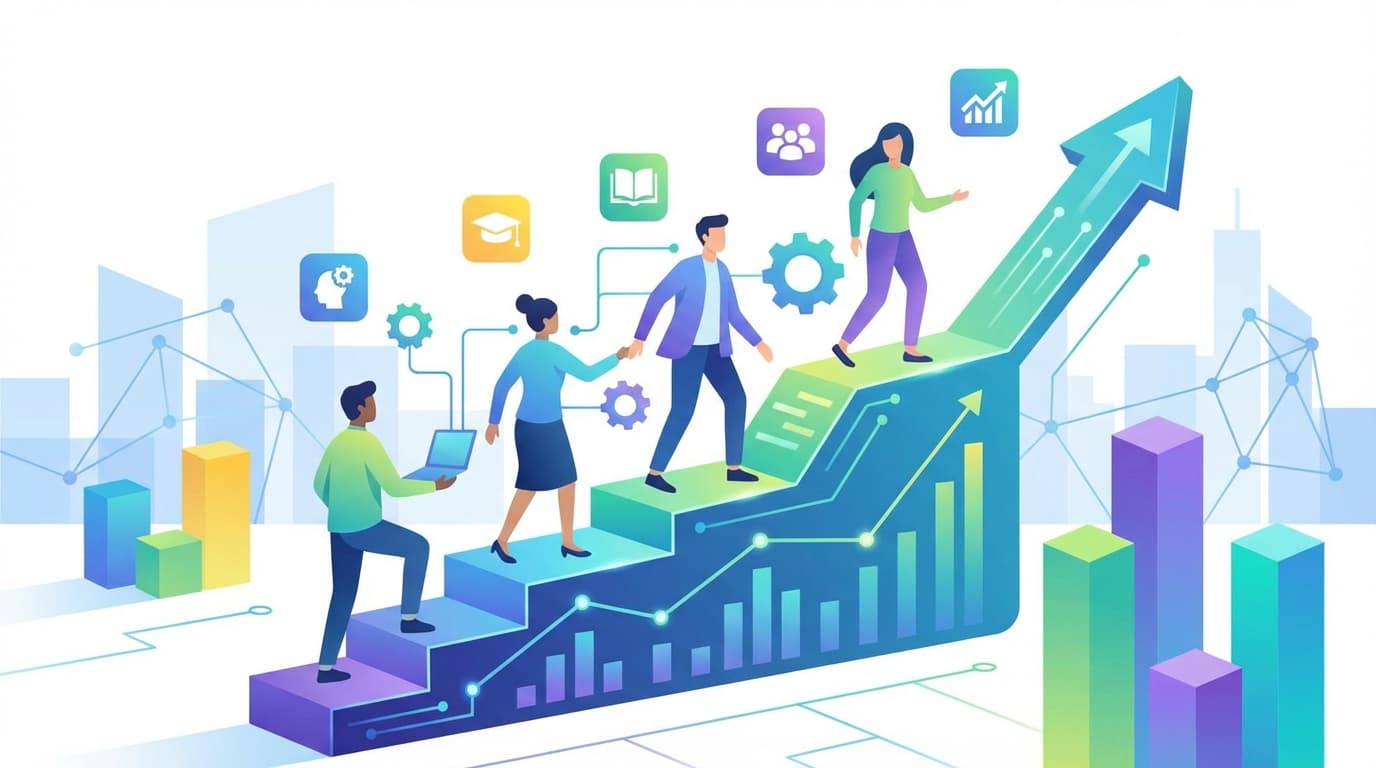
The year 2026 presents companies with a choice they can no longer postpone. Qualified talent is scarce, artificial intelligence is changing the rules of the game, and employees expect more than a stable paycheck. Training and development have ceased to be a nice-to-have perk and have become a strategic necessity without which organizations lose their competitive edge.
The numbers speak clearly. A ManpowerGroup survey conducted among 39,063 employers across 41 countries, including the Czech Republic, shows that in 2026 72% of employers worldwide report difficulties filling positions. Relying exclusively on external recruitment is a dead end. Companies that want to succeed must invest in the people they already have and create an environment where career growth isn't just a phrase on career pages but everyday reality.
Jaroslava Rezlerová, CEO of ManpowerGroup Czech Republic, puts it directly: "The world of work is undergoing the biggest transformation in decades. It's not enough to just react to individual changes. Companies must rethink the very concept of work roles, how they lead people, and how they connect human potential with technology. Success will be determined by adaptability, the courage to invest in skills development, and long-term talent management."
Which strategies actually work in 2026? Here are seven of them: concrete, proven, and results-focused.
1. AI-Powered Personalized Learning
Imagine a learning system that knows each employee's strengths, understands their career goals, and automatically recommends exactly the content they need. That's precisely what AI-driven personalized learning enables today. Algorithms analyze data on individual performance, skills, and ambitions, then build customized learning paths accordingly.
The era of universal training sessions where everyone goes through the same content regardless of individual needs is over. It's being replaced by platforms that recommend specific microlearning modules, online courses, or internal projects tailored to each person in the company.
Why Is This Critical in 2026?
According to ManpowerGroup, artificial intelligence-related skills have become the most difficult to find globally for the first time, surpassing traditional engineering and IT capabilities. Jonas Prising, Chairman and CEO of ManpowerGroup, comments: "The rise of AI skills to the top of the shortage list reflects how rapidly the talent landscape is evolving... AI isn't replacing jobs, it's reshaping work."
Companies are therefore using AI not only to automate processes but also to personalize learning and predict employee development needs. Key areas include:
- AI Literacy Development: Basic understanding of artificial intelligence principles for all employees, not just technical roles
- Predictive Learning Needs Analysis: AI systems identify skills gaps before they become problems
- Adaptive Learning Paths: Content dynamically adjusts to each individual's pace and learning style
For HR departments, this represents a fundamental shift. Instead of reactive training planning comes proactive development management, where technology functions as an intelligent guide to career growth.
2. Supporting Internal Mobility and Reskilling
Why look for talent outside when you might already have it in-house? Internal mobility (moving employees between roles, departments, or projects within one organization) is one of the most effective tools for retaining key people in 2026. Upskilling and reskilling existing employees represent the most common response by companies to talent shortages.
The data confirms this. According to the ManpowerGroup survey, 91% of employers resort to a combination of strategies to address talent shortages, with the most common being upskilling existing employees, a path chosen by 27% of employers.
How to Implement Internal Mobility Effectively?
It's not enough to simply declare that "we support internal moves." A successful strategy requires a systematic approach:
- Detailed Job Activity Analysis: Mapping which tasks can be automated and which require human judgment
- Identifying AI-Impacted Roles: Understanding how existing positions are transforming and what new roles are emerging
- Retraining for Higher-Value Positions: Targeted preparation of employees for roles where the human factor is irreplaceable
- Transparent Internal Job Market: Creating a platform where employees see available opportunities and can apply for them
Supporting internal career growth is one of the main pillars of engagement and overall employee experience. Employees who see real advancement opportunities within the company have significantly lower tendencies to look for opportunities elsewhere. It's simple: people don't leave companies where they have room to grow.
3. Systematic Soft Skills Development
Here's the paradox of 2026: the more routine tasks AI takes over, the more valuable become abilities that no algorithm can master. Soft skills (communication, adaptability, problem-solving, critical thinking) are now what distinguishes an average employee from an exceptional one.
In the rapidly changing environment of 2026, these skills are considered particularly critical:
- Adaptability: The ability to quickly adjust to new tools, processes, and ways of working
- Communication: Effective information sharing in hybrid teams where remote work combines with office work
- Problem-Solving: Creative approach to complex challenges where technology serves as a tool, not as a replacement for human judgment
- Critical Thinking: The ability to evaluate information, recognize biases, and make informed decisions
How to Develop Soft Skills in Practice?
Unlike technical skills, which can often be acquired through online courses, soft skills require a different approach. They need practical exercise in real situations, feedback from colleagues and mentors, and long-term, systematic development. Workshops, practical seminars, and mentoring programs are therefore irreplaceable.
These abilities are also essential for effective functioning in hybrid teams, which have become the standard organizational model in 2026. An employee who can communicate effectively across digital channels, resolve conflicts remotely, and adapt to changing conditions has a significant competitive advantage in the job market.
4. Building a Culture of Continuous Learning
One reskilling course per year? That's nowhere near enough in 2026. Technology changes so rapidly that organizations need to create an environment where learning is a natural part of everyday work, not a one-time event that employees check off in their calendars.
Recommended: Effective Compliance Training in 2026
A culture of continuous learning rests on several key pillars:
- Access to Online Courses and Learning Platforms: Employees should have a wide range of educational content available that they can use according to their needs and at their own pace
- Participation in Professional Conferences and Webinars: Connecting with the broader professional community and tracking the latest trends
- Dedicated Time for Learning: Formal allocation of work time for skills development so that learning isn't perceived as "something extra"
- Knowledge Sharing Within the Organization: Internal presentations, knowledge-sharing sessions, and peer-to-peer learning
For employees, this means the need to actively track trends in their field and continuously upskill. And for companies? Those that actively support this culture create an environment where career growth becomes a natural consequence of everyday work, not the result of random opportunities.
5. Individual Career Plans and Meaningful Work
Money matters, but it's not enough on its own. Employees, especially Gen Z, are looking for meaning in their work. They want to know that their work has impact and that they're moving forward professionally. An individual career plan (a structured document connecting an employee's personal aspirations with organizational needs) is a key tool for maintaining motivation and loyalty in 2026.
Managers play a crucial role in this. Their task is to:
- Conduct Regular Conversations About Career Aspirations: Structured one-on-one meetings focused on professional development, not just operational matters
- Help Clarify Values: Support employees in clarifying what's truly important to them at work
- Create Clear and Achievable Career Paths: Define specific milestones and skills needed for advancement
- Connect Daily Tasks with Company Goals: Ensure employees understand how their work contributes to overall organizational success
When an employee's personal values align with the company mission, it significantly increases motivation and loyalty. An employee who understands the meaning of their work and sees a clear path to their professional goals is more engaged and productive. It's that simple.
6. Data-Driven Strategic Talent Management
Intuition has its place, but in employee development management in 2026, it's complemented (and often replaced) by advanced analytics. Data-driven talent management means HR departments use hard data for proactive workforce development planning instead of just putting out fires.
Recommended: Employee Training: Effective and Measurable Strategies
Data-based strategic initiatives enable not only reacting to problems but anticipating them. Key areas of data analytics in HR include:
Analysis of Key Metrics
- Turnover Data: Identifying patterns and causes of employee departures, including predicting at-risk groups
- Engagement Measurement: Regular tracking of employee satisfaction and motivation through pulse surveys
- Performance and Skills Analysis: Mapping competencies across the organization and identifying gaps that hinder career growth
- Return on Investment (ROI) Assessment: Measuring the effectiveness of development programs and allocating resources to those with the highest returns
Data-driven decision-making enables more effective resource allocation where they deliver real results. Instead of guessing what training to offer, HR managers can identify specific skills gaps and address them in a targeted way. The emphasis shifts from mere engagement to overall employee experience throughout the entire employee lifecycle, with internal career growth playing a key role.
7. Flexibility and Support for Autonomous Teams
Hybrid and flexible work models are the standard in 2026. Period. Companies that restrict flexibility without clear justification risk losing their best people. Autonomous teams (work groups with the authority to make independent decisions, test new solutions, and manage their projects without excessive central control) increase motivation, satisfaction, and productivity.
Why does it work? Because employees feel trust and responsibility for the results of their work.
Key Elements of Effective Flexibility
- Remote Work Infrastructure: Quality technological infrastructure enabling full-fledged work from anywhere
- Clear Communication Channels: Defined tools and rules for both synchronous and asynchronous communication
- Project Management Tools: Platforms ensuring transparency and work trackability without the need for micromanagement
- Trust and Accountability: Shift from controlling hours worked to evaluating results and work impact
For career development, flexibility is crucial for a practical reason: it allows employees to better combine work with further education, participation in cross-departmental projects, and building new skills. Autonomous teams also provide a natural environment for leadership development: team members learn to take responsibility, make decisions, and lead others.
Risks and Challenges to Watch Out For
No strategy is without pitfalls. Even the best-intentioned development initiatives can fail if companies overlook the following risks.
Automation Without the Human Factor: A shortsighted approach where organizations replace employees with technology without sufficient human oversight and strategic planning leads to errors and loss of valuable know-how.
Administrative Burden: Especially small and medium-sized companies may face overload associated with implementing new technologies and reporting obligations, such as in transparent compensation. This can slow the rapid implementation of development programs.
Gap Between Declared Flexibility and Practice: Many companies proclaim flexibility but actually push people back into offices. This disconnect leads to frustration and departure of talent who legitimately expect flexibility.
Succession Crisis: Younger generations have lower ambitions to pursue leadership positions. Combined with an aging workforce, this signals a potential crisis in leadership and knowledge transfer. Development programs should therefore work specifically on building leadership competencies.
How to Start: Practical Implementation Steps
Transforming the approach to employee development is a complex process, but it doesn't have to start with a big bang. Companies can proceed step by step and build on the successes of individual initiatives.
The first step is a current state audit: mapping existing skills, identifying gaps, and understanding employees' career aspirations. Based on this data, priorities can be determined and focus placed on areas where development is most urgent.
The second step is selecting the right tools. Modern LMS platforms enable personalizing educational content, tracking employee progress, and measuring the impact of development programs on organizational performance. The key is choosing a solution that integrates with existing HR systems and supports data-driven decision-making.
The third step is engaging management. No employee development strategy can succeed without active leadership support. Managers must be not only ambassadors of a learning culture but also active participants in development programs. If the boss doesn't learn, it's hard to require learning from others.
Investment in People as a Competitive Advantage
The year 2026 brings challenges and opportunities on a scale we haven't experienced before. The talent shortage affecting 72% of employers globally according to the ManpowerGroup survey clearly shows that relying solely on external recruitment is a path to a dead end. The future belongs to organizations that can systematically develop their existing employees, create meaningful career paths, and build a culture where learning is a natural part of work.
The seven strategies presented in this article (from AI-powered personalized learning through internal mobility and soft skills development to data-driven talent management and flexibility support) form a comprehensive framework for organizations that want not just to survive but thrive in 2026.
As Jaroslava Rezlerová from ManpowerGroup Czech Republic summarizes, success will be determined by "adaptability, the courage to invest in skills development, and long-term talent management." Companies that embrace this challenge will gain not only loyal and qualified employees but also a sustainable competitive advantage in a market changing faster than ever before.
 Ready to transform your training?
Written by
LearnSkill Team
Helping companies build better learning experiences.
Transform Your Corporate Training
Create engaging courses, track progress, and ensure compliance with LearnSkill's modern LMS platform.
Related Articles
AI Microlearning Boosts Performance
More than just bite-sized content: How AI-powered microlearning drives real performance in 2025
Effective Compliance Training in 2026
How to build a compliance training program that actually works in 2026.
Employee Training: Effective and Measurable Strategies
How to train employees in 2026: E-learning, in-person training, or mentoring? Compare costs, performance, and measurability to find the ideal training mix.