
AI Microlearning Boosts Performance
More than just bite-sized content: How AI-powered microlearning drives real performance in 2025
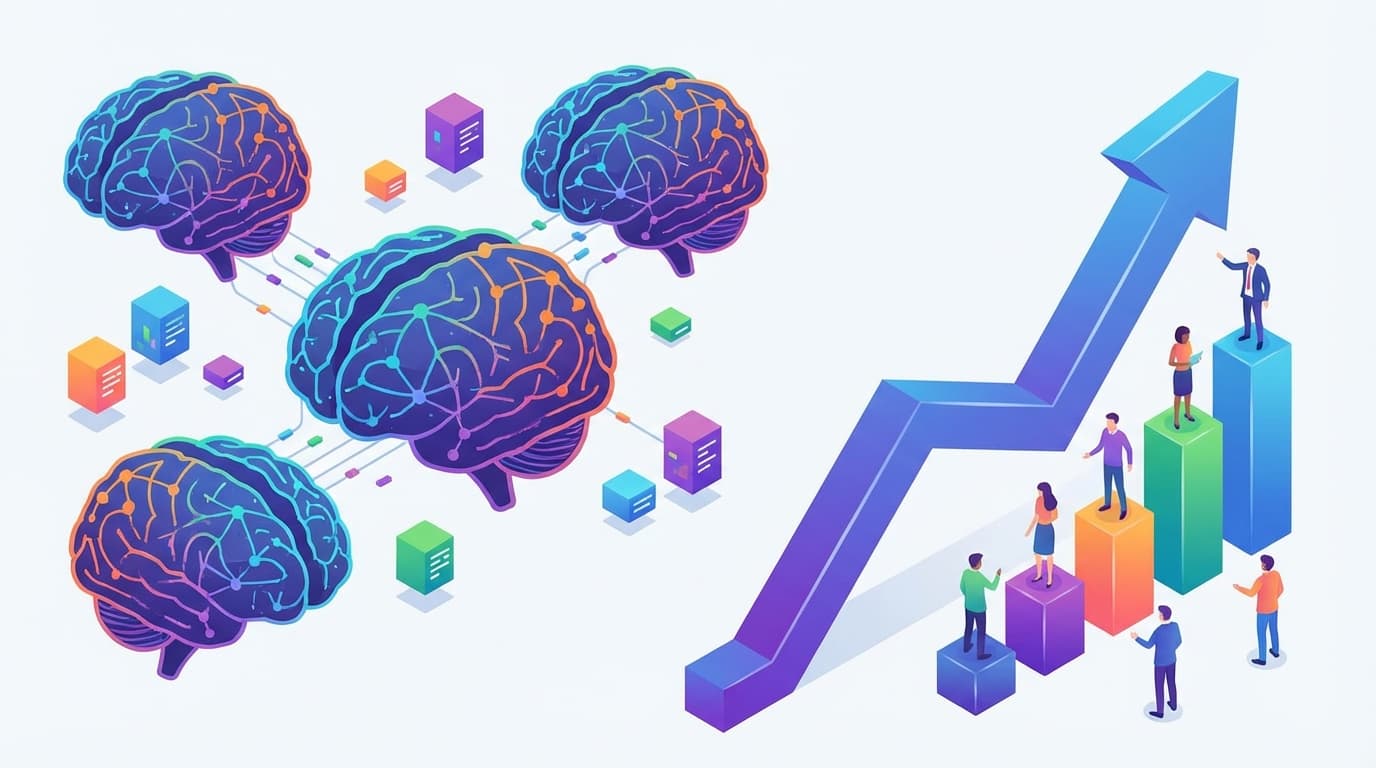
You know the feeling. You open a corporate e-learning module, click through dozens of slides, answer a few questions, and get a certificate. What did you actually learn? Hard to say. This ritual, repeated in companies for years, is finally facing serious competition. The year 2025 has brought a fundamental transformation in corporate training, and at its center stands the convergence of two forces: microlearning and artificial intelligence. This isn't just about breaking content into smaller chunks. It's a fundamentally different approach to how companies develop their people, how they measure the real impact of training on performance, and how they leverage technology so that every employee learns exactly what they need, exactly when they need it.
In this article, we'll explore why microlearning alone isn't enough, how AI is elevating training to an entirely new level, what opportunities and risks this approach brings, and why companies that ignore this trend could soon lose their competitive edge.
Why Traditional E-Learning Is Failing
Traditional e-learning modules have one fundamental problem: people don't like them. They perceive them as tedious and unengaging. According to analysis from educational systems portals, employees often click through these modules just to get the certificate, without retaining actual knowledge. The entire model is based on the assumption that everyone needs the same information in the same order at the same time. Long linear courses, identical for everyone regardless of knowledge level or job role, simply don't meet the needs of the modern workforce.
But be careful: the problem isn't just the length of the content. It's the entire philosophy. Every employee has different knowledge gaps, different work pace, and different career goals. One course for everyone simply cannot reflect this reality.
From Universal Courses to Personalized Pathways
The year 2025 has definitively confirmed the shift from universal courses to personalized learning paths. As educational systems portals note in their analysis of digital learning trends, the modern approach focuses on efficiency and real impact on performance. Users expect quick, concrete answers they can consume anytime, anywhere. Long linear courses are giving way to shorter, modular formats that increase engagement and simplify content updates.
This shift isn't purely technological. It's a change in the entire mindset about corporate training. It's not about having an employee "complete a course." It's about them acquiring a specific skill or knowledge they can immediately apply in their work. And that's a crucial difference.
What Is Microlearning and Why It's Not Enough on Its Own
Microlearning is an educational approach based on delivering small, targeted doses of information. Typically, these are short lessons, videos, quizzes, or interactive modules focused on one specific skill or piece of knowledge. The key advantage is the possibility of just-in-time learning: exactly when an employee needs that skill.
However, microlearning alone isn't a magic bullet. And this is where many companies go wrong. If a company simply chops up its existing long course into smaller parts without any personalization or adaptivity, the result will be just as ineffective as before, just in a smaller package. The true power of microlearning emerges only when it's supported by artificial intelligence that can dynamically adapt content to each individual's needs.
Just-in-Time Learning as a Key Principle
The principle of just-in-time learning is one of the strongest arguments for microlearning. Imagine a sales representative who needs to quickly review key features of a new product before a meeting. Or a new employee who needs to immediately understand a specific company process. In these situations, a short, targeted micro-lesson is incomparably more effective than an hour-long e-learning course.
According to analysis from educational systems portals, this approach enables learning exactly when an employee needs the skill, which dramatically increases the likelihood that what's learned will actually transfer to practice.
How AI Is Transforming Microlearning in 2025
Artificial intelligence is what elevates microlearning from simple "short content" to a truly intelligent learning system. AI doesn't just function as an automation tool. Its main contribution lies in streamlining and personalizing education. And its role in the context of microlearning includes several crucial areas.
Adaptive Learning Paths
AI analyzes individual performance and knowledge gaps and dynamically adapts content. Is an employee struggling in a certain area? The system automatically offers additional micro-lessons focused on that issue. Does someone demonstrate a high level of knowledge? The system moves them to more advanced content without holding them back with repetition of what they already know.
This adaptive approach, as noted in digital learning trend analyses, responds to a student's strengths and weaknesses in real time. The result is a learning path that is unique and maximally relevant for each employee.
Predictive Content Recommendations
One of AI's most advanced capabilities in education is predictive recommendation. Based on job role, past performance, and career goals, AI can proactively recommend relevant educational content before an employee even realizes they need it. Learning thus shifts from reactive to proactive. The system doesn't just respond to what an employee is looking for, but actively suggests what they should learn next.
Automated Content Creation
AI tools can quickly generate text, quiz questions, video scripts, and other micro-content elements from existing company materials like manuals, internal documentation, and product sheets. This dramatically reduces the time and cost of course development. A company that previously needed weeks to create a training module can now, with AI's help, create a quality micro-lesson in a matter of hours.
As emphasized in discussions like Tech Talk on AI in 2025, AI enables creating smarter content in less time, which is crucial for companies that need to respond quickly to changing market conditions or new regulations.
Chatbots and Virtual Assistants as Learning Supplements
AI-powered chatbots can serve as round-the-clock learning support. They answer employee questions, provide quick information, and complement more formal micro-lessons. Employees don't have to wait for the next training session or dig through extensive documentation; they can simply ask a virtual assistant and get an immediate answer.
Hyperpersonalization: The New Standard in Corporate Training
Hyperpersonalization is an approach where artificial intelligence and data analytics enable companies to gain deep insights into employee preferences and behavior, and based on this data, create learning experiences tailored to each individual. According to Forbes analysis, hyperpersonalization ranks among the five biggest business trends for 2025, with strong implications for corporate training.
What does this mean in practice? Two employees in the same position can have completely different learning paths. One focuses on developing technical skills, another on communication competencies, all based on data about their actual performance and needs. No guessing, no universal solutions.
From Pilot Projects to Strategic Integration
In the community of HR professionals and learning and development (L&D) specialists, the theme of transitioning from pilot projects to full strategic integration of AI resonates strongly. While AI use in education was previously seen as an experiment, it's now becoming reality and a key component of corporate strategies. As corporate training portals note, experts agree that digital transformation is primarily about developing people: it's not enough to just buy AI tools; you must ensure employees know how and want to use them.
Emphasis is placed on building what experts call "digital thinking" across the entire organization. Leaders should lead by example and actively use AI themselves, creating a culture where technological literacy is a natural part of work life.
Hybrid Model: Combining Online and Offline Learning
E-learning has long ceased to be just an emergency substitute for in-person training. In 2025, it's an equal component of the learning mix. The most effective models combine the advantages of in-person instruction like workshops and seminars with the flexibility of online environments, where microlearning plays a key role in maintaining and reinforcing knowledge.
This hybrid approach, as educational systems portals note, gives employees greater autonomy and allows them to learn anytime, anywhere. In-person meetings serve for deeper practice, discussion, and building team dynamics. Online micro-lessons then ensure continuous knowledge reinforcement and immediate access to information when needed. Both components complement each other, and that's where the power of this model lies.
National Context: Czech Republic Invests in AI Literacy
The importance of AI skills is confirmed at the national level. In the Czech Republic, the AI National Skilling Plan initiative was launched with the goal of training over 350,000 people in artificial intelligence. According to the Czech Association of Artificial Intelligence (ČAUI), the initial investment in the project exceeded 10 million crowns, underscoring the nationwide emphasis on AI literacy as key to the digital future.
This step clearly shows that developing AI competencies isn't just a matter for individual companies, but a strategic priority at the national level. For companies, this means one thing: investments in AI-supported training aren't a luxury, but a necessity for maintaining competitiveness.
Strategic Importance: Why Companies Can't Wait
Integration of AI across all business segments is becoming necessary for maintaining competitiveness. According to analysis from AI portals, companies that underestimate the importance of artificial intelligence risk losing their lead within a few years, similar to companies that previously ignored the internet or mobile revolution.
And that comparison isn't exaggerated. Just like the internet in the 1990s and mobile technology in the following decade, AI is changing the rules of the game in all industries. Companies now investing in AI-supported employee training are building the foundation for long-term competitive advantage. Those waiting risk falling behind in a way that won't be easy to recover from.
Key Steps for Companies
- Reevaluate existing training programs: Identify which long courses can be transformed into microlearning format with AI support.
- Invest in an LMS platform with AI features: Choose a system offering adaptive learning paths, predictive recommendations, and automated content creation.
- Build digital thinking: Ensure company leadership leads by example in actively using AI tools.
- Measure real impact: Move from measuring "how many people completed the course" to measuring "how their performance changed."
- Prepare for regulation: Monitor legislative developments, especially the AI Act, and adjust internal processes in time.
Risks and Challenges That Cannot Be Ignored
AI-powered microlearning brings enormous opportunities, but also risks that companies must actively address. A responsible approach to implementation is as important as the technology itself. Enthusiasm for AI's possibilities must not overshadow a sober view of the pitfalls.
Regulation and Legislation
Upcoming regulations, such as the European Union's AI Act, will bring new obligations for companies using AI in employee training. It will be necessary to adjust internal guidelines and ensure compliance with legislation, especially regarding data processing and algorithm transparency. In the L&D specialist community, discussion is growing about the need to prepare for this new legislation in advance, not when it takes effect.
Content Quality and Human Oversight
Content generated by artificial intelligence requires careful review. AI can quickly create materials, yes. But human oversight and critical thinking remain key to ensuring factual accuracy, safety, and content relevance. A company that blindly trusts AI-generated content without review risks spreading inaccurate or misleading information. And that's especially dangerous in the context of corporate training.
Ethical Questions and Privacy
Using AI to evaluate and track employee progress raises legitimate ethical questions. What about privacy? Aren't algorithms biased? Companies must ensure transparent data processing conditions and clearly communicate to employees how their data is used. Trust is fundamental; without it, no training system will work.
Digital Divide
Despite massive training efforts, there's a risk that some employees won't be able or willing to adopt new technologies. Bridging this digital divide will be a key challenge for L&D departments. The solution may be gradual implementation, adequate support, and a patient approach to employees who need more time to adapt. Implementation speed must not come at the expense of the people the training is meant to serve.
The Future Is in Intelligent Learning
AI-powered microlearning isn't just another trend that will disappear in a year. It's a fundamental shift in how companies approach developing their people. The combination of short, targeted content with intelligent personalization, adaptivity, and predictive recommendations creates a learning ecosystem that truly boosts employee performance, not just course completion statistics.
For companies in the Czech Republic, the situation is all the more urgent as national initiatives like the AI National Skilling Plan clearly signal the direction the entire economy is heading. Investments in AI-supported training aren't a question of "if," but "when," and the answer is: right now.
The key to success isn't just the technology itself. It's the ability of companies to connect it with a clear training strategy, quality content, and a culture that supports continuous learning. Companies that master this approach will gain not only more educated employees, but also a more agile organization prepared for future challenges.
 Ready to transform your training?
Written by
LearnSkill Team
Helping companies build better learning experiences.
Transform Your Corporate Training
Create engaging courses, track progress, and ensure compliance with LearnSkill's modern LMS platform.
Related Articles
AI Articles Are Transforming Corporate Training
AI-generated articles in 2026: Complete guide to the era of autonomous content
Employee Development Strategies for Growth
7 employee development strategies that actually support career growth in 2026
Effective Compliance Training in 2026
How to build a compliance training program that actually works in 2026.